Monthly Archives: July 2025

God Speaks: Special Revelation and the Word Made Flesh

Category: Theology Proper > The Existence of God > Special Revelation

Text: Hebrews 1:1–3; Psalm 19:7–11; 2 Timothy 3:16–17; John 1:1–14

We learned how God speaks through creation, and while nature tells us that God exists, it does not tell us who He is, or how to be reconciled to Him. This is why God has spoken more clearly and specifically than just through nature, so to save the mankind. It is through His Word and through His Son, and this is called the special revelation while the message of His existence through nature is called the general revelation.

I. Definition

There are two ways that God reveals Himself:

  1. General revelation — in creation and conscience. It’s available to all people at all times (Romans 1:20). C. S. Lewis did an excellent job of explaining this, and he calls it the universal morality in his book Mere Christianity.
  2. Special revelation — in Scriptures, and ultimately in our Lord Jesus Christ. It is specific, verbal, and redemptive.

Romans 10:13-17 tells us tthat “faith comes by hearing, and hearing by the word of Christ.” You cannot come to saving faith through stargazing, feeling the sense of awe at Grand Canyon, or admiring a beautiful sunset. You must hear the Gospel—that Christ has died for our sins and resurrected—and that we confess our sins and accept Him as the Lord and Savior.

Throughout history, God has spoken to Adam in the Garden, to Noah to make a covenant with him, to Moses from the burning bush and on Mount Sinai, to Israel through many prophets, to the Church through the written Word, and to the whole world through His Son. God is not silent. He speaks that we may live.

II. God speaks through Scripture

Psalm 19, after marveling at the glory of creation, shifts in verse 7 to the glory of the Word:

“The law of Yahweh is perfect, restoring the soul; The testimony of Yahweh is sure, making wise the simple.” (v.7)

The psalmist describes God’s Word with seven terms: law, testimony, precepts, commandment, fear, judgments—and in each case it is perfect, right, pure, true, and eternal. More desirable than gold, sweeter than honey.

Why? Because it restores the soul. No sunset can do that.

Paul reinforces this in 2 Timothy 3:16–17:

“All Scripture is God-breathed and profitable… so that the man of God may be equipped for every good work.”

The Bible is not just a moral guidebook—it is the voice of God in written form. It teaches, corrects, and trains us to be holy. God Himself is speaking to us through His Word.

III. God speaks through his son

Now turn to Hebrews 1:1–3. Here is the climax of God’s speaking:

“God, having spoken long ago to the fathers in the prophets in many portions and in many ways, in these last days spoke to us in His Son…”

God once spoke in bits and pieces—through Moses, David, Isaiah—but now He has spoken fully and finally in Jesus.

Christ is not just the messenger—He is the message. He is the radiance of God’s glory and the exact imprint of His nature.

John 1:1 says,

“In the beginning was the Word, and the Word was with God, and the Word was God.”

And verse 14 declares:

“The Word became flesh and dwelt among us, and we saw His glory…”

Christ is the visible image of the invisible God (Colossians 1:15). To know Jesus is to know the Father. He exegetes God for us (John 1:18).

IV. The Necessity and Urgency of Special Revelation

This is not just theology—it’s life and death.

  • People cannot be saved apart from the Gospel (Romans 10:14).
  • The world does not need more vague spirituality—it needs the Word of God.
  • And we, the Church, must proclaim it.

Hebrews 12:25 warns,

“See to it that you do not refuse Him who is speaking…”

God has spoken. We must listen, believe, and obey.

Special Revelation is the blazing center of God’s communication to us. Through Scripture, we have His words; through Jesus, we have His very heart.

God is not hidden. He is not silent. He has spoken to you in the Bible, and He has come to you in the flesh.

“Today, if you hear His voice, do not harden your hearts…” (Heb. 3:15)

Let us draw near, with reverence, repentance, and worship, to the God who speaks.
God is There: He Has Not Remained Silent

Category: Theology Proper > The Existence of God > General revelation

Text: Psalm 19:1-6; Romans 1:18-20

The Word of God does not begin with a Socratic question of inquiry, or an argument, but a proclamation: “In the beginning God created the heavens and the earth.” There wasn’t a Big Bang in the beginning, but the Creator God who has always been, is, and always will be. (Those who put their belief in the religion of godless universe while claiming to be Christians are contradicting themselves because they also believe that death was in the world even before a man came into being—some even believe in having monkeys as their ancestors! The Bible gives us no other alternative for the salvific plan of God through Jesus Christ. Death came because of the rebellion of a man.)

There is my favorite Korean podcast that often features intellectuals from various fields, and recently it featured a guest named Kim Yong-ok, or popularly known as Do-ol in Korea. In past set of lectures that was widely popular in Korea, he distinctly brought into question the Biblical account of Jesus Christ with questionable apocryphal texts. I was saddened to see him featured on this podcast, but also remembered Jesus’ words that the world hates him and his followers. Not only that of Jesus, but also the very existence of God Himself is often brought into question in today’s world.

In our age of skepticism, God’s existence is often treated as a debatable theory, and sadly, even so-called pastors seem to hold humanistic beliefs while feigning theocentric views in their sermons. But the Bible never presents God’s existence as optional or theoretical. Instead, it declares: “The heavens are telling of the glory of God; And the expanse is declaring the work of His hands” (Psalm 19:1, LSB).

God is not silent. He has spoken—not only through the Bible, but also through the very world you live in. And that voice of creation is unceasing and unavoidable.

1. The reality of God’s revelation in creation
Psalm 19 tells us that “day to day pours forth speech, and night to night reveals knowledge” (v.2). Creation is a 24/7 preacher. It doesn’t use words or language, but it communicates powerfully and universally. Look at the stars: They declare vastness, order, and beauty—evidence of an infinite Creator. Those who espouse mechanistic view of the universe believe simplistically that because we can look so far beyond our own Milky Way that there’s very little else that we can discover about our own universe. This is a pure hubris that verges on being comical, because even though we have a lot of conjectures about how the universe came to be, none of them are empirical, and they are all based on fundamental, axiomatic beliefs that are no different from a religious belief at the baselines. For example, the advances in quantum mechanics have essentially superseded some fundamental assumptions that have been part of the Standard Model of particle physics (e.g. point-like charges to quark fields, Maxwell’s equations to QED, Coulomb’s law to gauge bosons, Newtonian mechanics to probabilistic wavefunctions & quantum fields, etc.) In this way, in spite of many believing that advances in empirical and parts of theorical science replacing the traditional worldview, it has merely enhanced it.

One of the primary textbooks of Confucianism, The Thousand Characters Book (千字文) that has been in use for over 1,500 years, starts out with words 天地玄黃宇宙洪荒, “The heavens are above and it’s black, and the earth is below and it’s brown. The space time is wide and vast” — it’s merely a description of the world that God has created, and it goes on to describe the fundamental changes and orderliness of the world we live in. We find keen observations in other non-Christian cultures reaffirming the orderliness and design of the Creator in the nature!

日月盈昃 辰宿列張. Feel the warmth of the sun, and the regular changes to the moon, and witness how perfectly God has placed the moon and the sun from the earth, and see how the vast number of stars are spread out across the sky: a faithful witness to God’s provision and purpose.

Hear the wind rustle the trees, or see the birth of a child: all declare the glory of a personal, intelligent God.

The sun is described in verses 5–6 as moving across the sky with joy and strength. It is not only a light-giver but a symbol of God’s sustaining power. There is no part of the earth untouched by its heat, and likewise, no soul untouched by the witness of God’s creation. This is also reflected in 千字文, and all other cultures that carefully observed the nature. They all testify to the intricate and sophisticated design and workings of the nature.

2. The suppression of God’s revelation by fallen man
But despite such clear witness, evident across all different cultures of men, why do people reject God?

Romans 1:18 says: “For the wrath of God is revealed from heaven against all ungodliness and unrighteousness of men who suppress the truth in unrighteousness.”

This is not ignorance. This is pure rebellion. Humanity doesn’t lack evidence—it suppresses it. People deny God not because He is unclear or hard to understand, but because they love their sin more than the truth. The refusal to acknowledge God is an act of the will, not of reason. One of the best reasoning mind in history, Isaac Newton—credited with contributing in a major way to the field of mathematics and physics—was also a serious biblical scholar who reaffirmed the Biblical authority, and had made contributions to the eschatology, biblical chronology, and the methods of bible study.

We must be careful here—the rebellion is not exclusive to just “those people out there.” All of us, before Christ saved us, suppressed the truth. And even now, we are tempted to live functionally as if God is not present, not watching, not judging.

3. The clarity and universality of general revelation
Paul continues in Romans 1:19–20:
“That which is known about God is evident within them; for God made it evident to them.”

What does this mean?

Internally, God has placed a conscience—a moral compass—that testifies to right and wrong. Externally, creation testifies of His eternal power and divine nature. These are not obscure hints. Paul says God’s attributes are clearly seen, so that all are without excuse. No one can stand before God and say, “I didn’t know You were there.” Every sunrise, every mountain, every heartbeat is a witness to Him.

This is why missions are urgent—not because people are innocent without the Gospel, but because they are guilty. General revelation is enough to condemn, but not to save. Only the Gospel of Jesus Christ can save.

4. Response to the God who has spoken
So, how should we respond? Listen. We live in a noisy world. Phones, media, politics—these drown out the voice of God. Slow down. Step outside. Gaze into the night sky. We need to ask God to renew our sense of awe, and worship Him with this awe.

Repent. Are you living yourself as if God is silent or absent? Turn from functional atheism and humble yourself before Him.

Worship. Give glory to God for the gift of creation—and even more for the gift of His Son.

Psalm 19 goes on to speak of the Word of God (vv.7–11) and culminates in a prayer (v.14):
“Let the words of my mouth and the meditation of my heart be acceptable in Your sight, O Yahweh, my rock and my Redeemer.”

God is not distant. He is not silent. He is there—and He has spoken. The sky preaches His glory. Your conscience whispers His law, just as all those careful observers of nature testifies in all those writings. The Scriptures proclaim His will. And Jesus Christ reveals His love.

Let us bow in reverence, lift our eyes in worship, and open our mouths in praise. The God who is there is also the God who saves.

Christ did not go to East to learn from Hindu gurus

The pastor of the last Korean American church—initially a UMC church—I had served genuinely believed that Jesus had gone to India, thereby believing that Jesus’ teaching was directly influenced by ancient vedas, this pastor had attempted to learn Sanskrit. At the time, I didn’t think much of it since he initially told me that he was actively trying to teach proper Biblical studying methods to his liberal colleagues, and his interest, just like mine, seemed to be in learning languages. However, as months turned into years, I slowly realized that he merely put up a thin façade with coded language to cover up his proclivity for fringe. Of course, as he got bolder about his unorthodox beliefs and things became more apparent with his aggressive attitudes against those who genuinely wanted to plainly learn from the Bible, I made a beeline for exit. This was my final exit from the Korean American church, a ground that has been made toxic with theological progressivism and the worship of worldly credentials.1

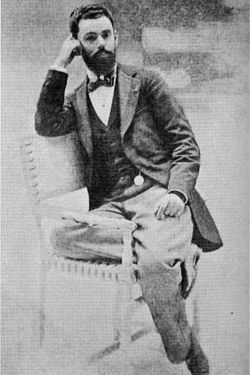
Nicolas Notovitch

The idea that Christ had gone to East to learn from gurus was initially fabricated by a Crimean Jewish traveler named Nikolai Aleksandrovich Notovich, aka Nicolas Notovitch in English. He published a book called The Unknown Life of Jesus Christ in 1894, where Jesus had supposedly left Galilee for India and studied with Buddhists and Hindus, then returned to Judea. According to his writings, he had discovered a manuscript titled Life of Saint Issa (Issa is the Arabic name for Jesus) which documents Jesus’ travel (between ages 12 to 30) to India and studying with Brahmins and Buddhists. He later, albeit allegedly, confessed to fabricating the evidence. I guess this idea of Jesus studying abroad sound favorable to some Korean American pastors who have come overseas to study in the U.S. themselves. Even though we have the biblical record of Jesus’ family taking refuge in Egypt—about 370 miles away—people at the time rarely traveled outside of their home region. For Israelites at the time, this meant about 70 miles from east to west, and 250 miles from north to south. The distance from Israel to India is over 2,400 miles. We do have a tradition stating that one of the disciples of Jesus, namely Thomas, was martyred in southern part of India, and if one were to make an extrabiblical argument such things would be used to add credibility to that notion. In fact, this idea of Jesus studying in the East lives on in theosophical circles (i.e. Madame Blavatsky, Levi H. Dowling, Swami Abhedananda, etc.) and they stand directly opposed to biblical worldview. Only apostates put worldly ideas above the Word of God.

First of all, we have a clear warning about altering the Word of God, as found in these texts:

You shall not add to the word which I am commanding you, nor take away from it, that you may keep the commandments of Yahweh your God which I am commanding you.

Deuteronomy 4:2 (LSB)

None other than the Creator himself is making the warning here. And John of the Patmos also warns the same:

I bear witness to everyone who hears the words of the prophecy of this book: If anyone adds to them, God will add to him the plagues which are written in this book. And if anyone takes away from the words of the book of this prophecy, God will take away his part from the tree of life and from the holy city, which are written in this book.

Revelation 22:18-19 (LSB)

Some may argue that Jesus studying overseas is not altering of the text, but merely a supplementary material, just like the extrabiblical additional materials from the field of ANES (Ancient Near East Studies), or from archaeological findings, but such assumption necessarily presents with Christ that is different from what the Scripture clearly teaches us. If it is incongruent with what we clearly find from the written Scriptures on Christ, then we’re in fact indirectly altering what the Word of God clearly teaches by choosing to place the worldly teachings about Christ above the Scripture. Sadly, this type of undermining of the authority of the Scripture is far too common within today’s church, and few even go one step farther by pushing people into Satanic domain.

There are known cases where Christian pastors and Catholic priests teach that in trying to imitate Christ, we ought to learn from Eastern or pagan religions, even including witchcraft. I think that Korean American pastor I had mentioned also believed this, since he genuinely believed that Jesus had Vedic influences. (He also didn’t seem to have done anything when I had reported a New Age occult practice—use of crystals—incorporated into Christian communion at a Methodist youth retreat.) These folks teach that Christ “went to east, and studied with gurus in India… studied with lamas in Tibet… went to Egypt and studied with the magicians there. That’s how he was able to raise the dead, to walk on water , and to do all these miracles.”2 This may be one extreme example, but the baseline starts with the idea that Jesus had gone to India.

What would be the most effective way for Satan to infiltrate the church and dethrone Christ? Just have so-called Christian pastors, bishops, and priests to believe such lies about Christ: he is less than an omniscient Son of God since he had to learn from Hindu gurus and Buddhist monks. It’s that simple, and this is exactly what has happened with Christian churches today. Underneath their benign sounding sermons and virtue signaling with banners of love everywhere lies such a shattered Christology, and underneath it, a tattered Bibliology. It’s not any wonder why the churches are impotent and ineffective witness for Christ.

  1. The same pastor had lied about his degree from Harvard Divinity School. To a lackadaisical congregational response, he had confessed to this soon after the church had disaffiliated from UMC to join GMC. It seemed a mere sophisticated exercise in virtue signaling and not much more. You find them everywhere, but Korea just seems to have more of plagiarism, fake credentials, and dry labbing than other countries. In spite of all of the modern progress, the old habits die hard. ↩︎
  2. An interview with Dr. William Schnoebelen ↩︎